Sharpening
Knife Sharpening Guide: Ceramic Sharpeners & Whetstones
Learn how to choose ceramic sharpeners, whetstones and guided systems for knife care. Shop sharpeners from CCC Knives of Texas in Tomball, TX.
Knife sharpening and care from Tomball, Texas
Looking for knife sharpeners in Tomball, Texas, or learning how to sharpen a knife at home? CCC Knives of Texas offers sharpening supplies and practical knife-care guidance. Start with your blade’s edge shape and the instructions for your particular knife and sharpener.
Which knife sharpener fits the job?
| Tool | Useful for | Check before using |
|---|---|---|
| Ceramic rod or fine ceramic stage | Light edge touch-ups and refinement | Use a compatible edge angle and light pressure; keep the ceramic clean. |
| Whetstone or bench stone | Controlled sharpening along the edge | Match the abrasive, grit and lubricant to the stone’s instructions. |
| Diamond abrasive | Faster steel removal or work on harder steels | Avoid unnecessary coarse work; follow the particular product’s care instructions. |
| Guided sharpening system | Maintaining a repeatable bevel angle | Confirm the clamp and guides suit the blade’s thickness and shape. |
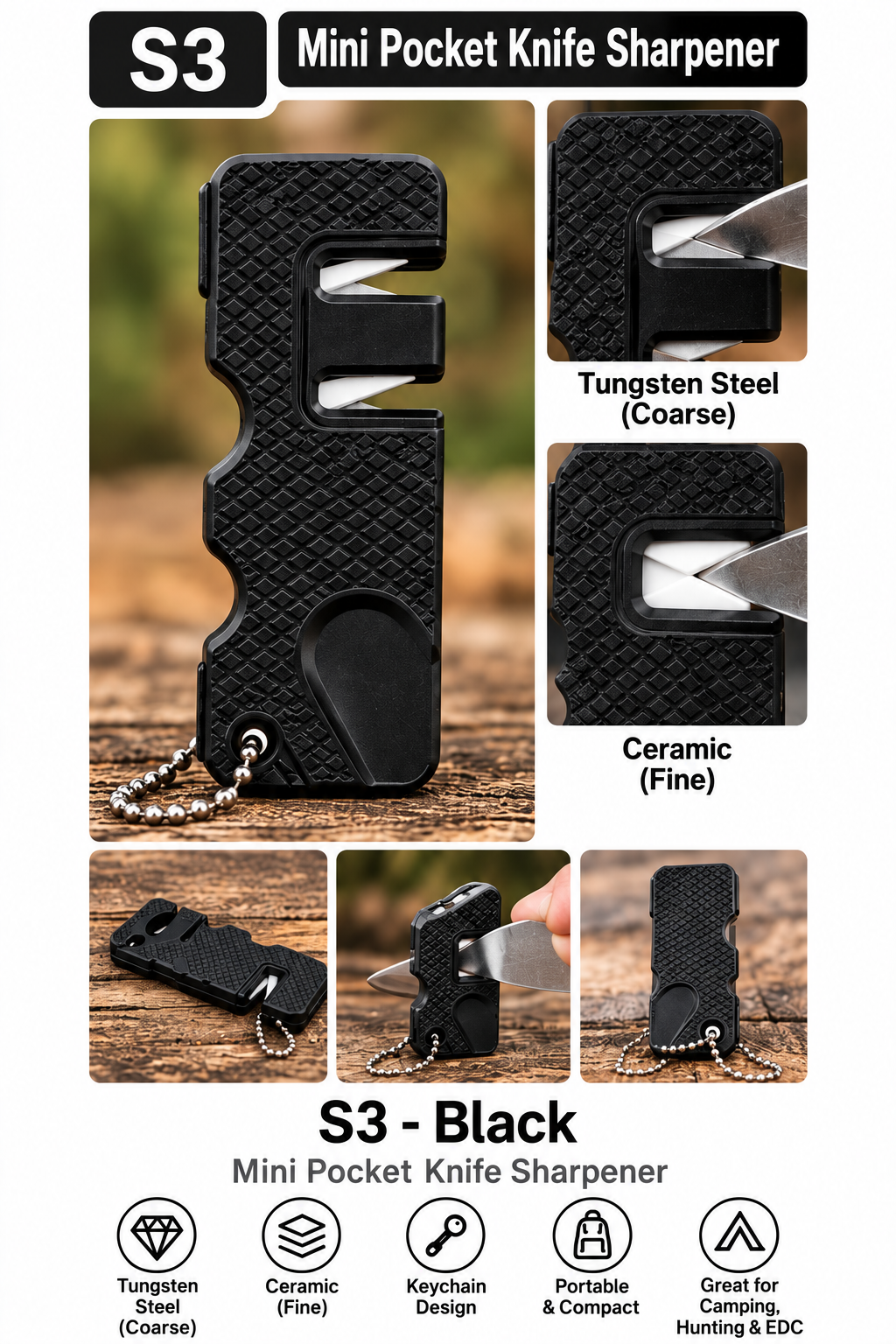
| Carbide pull-through stage | Quick field maintenance on compatible plain edges | Confirm compatibility first. Do not assume it suits serrations, single bevels or every knife. |
How to use a ceramic knife sharpener
Use ceramic for a light touch-up when the edge needs refinement. Read the sharpener’s directions, secure it as instructed and keep your fingers outside the blade’s path. Match the existing bevel or use the compatible guide supplied with the sharpener. Use slow, light strokes rather than force, checking progress often. Clean accumulated metal from the ceramic using the maker’s recommended method.
How to sharpen a knife with a whetstone
- Check the knife’s edge type and recommended bevel. There is no one angle that fits every knife.
- Prepare the stone exactly as its manufacturer directs. Some need soaking, some need only surface water, and others use oil. Do not assume all whetstones need a long soak.
- Secure the stone on a stable surface. Keep fingers clear of the edge and work slowly.
- Maintain a consistent angle along the edge. Start with a grit suited to the actual condition; coarse grinding is not needed for every touch-up.
- For a conventional double-bevel blade, work both sides appropriately, then refine with a finer abrasive if needed. Single-bevel and serrated knives require their own technique.
- Remove the burr with light finishing passes using the tool’s instructions. Clean away sharpening residue, dry the knife thoroughly and apply suitable protection when needed.
Sharpening Damascus, D2 and 440C knives
A steel name or Damascus pattern does not determine one universal sharpening method. Match your tool to the actual steel, edge geometry, heat treatment and condition. Preserve the original bevel unless you understand the effect of changing it. Protect decorative blade faces from accidental rubbing on the stone, and clean and dry the knife after sharpening. See our Damascus knife care guide and D2 and 440C comparison.
Knife sharpening in Tomball, TX — service coming soon
CCC Knives of Texas is based in Tomball and sells knives, sharpening supplies and care products online. Our knife-sharpening service is not open yet. We are not accepting sharpening drop-offs, appointments or payments. Email CCC with your knife type and questions, or ask to hear when the service becomes available.
Shop sharpening and maintenance supplies
Shop knife sharpeners Browse knife maintenance
Availability and product details appear on each listing. Follow the instructions supplied with the exact product.
Manufacturer references
This is general guidance, not a replacement for your equipment’s instructions. Read Lansky’s sharpening FAQ for abrasive selection and ceramic maintenance, and Shapton’s stone-use FAQ for stone preparation and grit progression.
Further reading
General references explain materials and care. They do not certify the steel, manufacturing origin or warranty of an individual CCC listing.
Questions about a particular knife?
Send us the SKU and your question so we can help with the actual item's details.
Ask CCC